
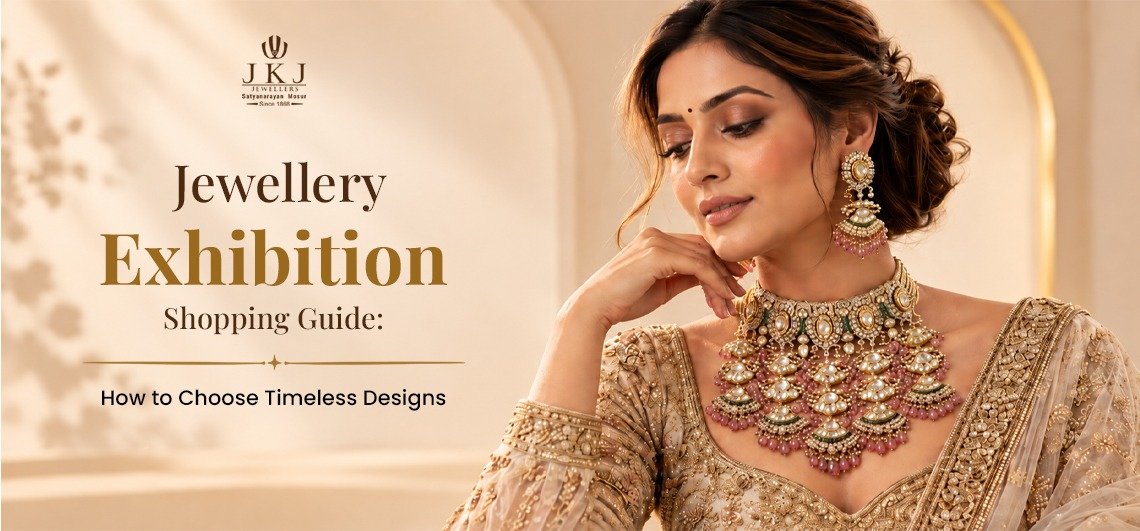
A jewellery exhibition can turn the search for a special piece into an exciting experience. Wherever you turn your head, you’ll see the rows are filled with gold jewellery, polki, kundan, jadau and diamond designs. All of them hold special value for every individual. To choose the right piece, you need to check a few more things than the first impressions. Prefer pieces that reflect your personal style and that you feel comfortable wearing. But an enormous number of designs come with a catch! You may get overwhelmed by options and wonder which one to choose.
That’s why a clear understanding of quality, design, versatility and proportion can help you choose the right option. On that note, this guide explains what you should look at at a jewellery exhibition so that you choose pieces that complement your style.
Why Choose Timeless Jewellery at an Exhibition?
The exhibitions gather the leading jewellery makers and designers to showcase their exquisite masterpieces made in traditional styles that will never go out of fashion. The classic character of timeless pieces makes them easier to pair with different outfits.
Timeless Jewellery vs. Trend-Driven Jewellery
Timeless jewellery and trend jewellery may complement each other, yet each has its own role within a collection. The table below compares the two types, so that you can choose the right one as per your preference at the exhibition:
| Timeless Jewellery | Trend-Driven Jewellery |
| Made according to classic designs and motifs | Showcases modern fashion trends |
| Retains its relevance despite changing styles | Loses popularity as styles change |
| Can be worn with various types of clothes and occasions | Suits certain types of clothes and occasions |
| Focuses on lasting personal appeal | Often chosen for its current visual appeal |
| Can become part of a jewellery collection | Adds variety and a modern look |
What Makes a Jewellery Design Timeless?
A timeless jewellery design brings together classic visual appeal, skilled craftsmanship, everyday versatility and a style that genuinely suits the wearer.
To choose a timeless design, take a closer look at the following factors:
Classic Design Elements
Classics demand balanced proportions, graceful silhouettes, exquisite detailing and motifs that go well with evolving trends. Floral patterns, geometric shapes, intricate filigree, kundan, meenakari or placement of stones in elegant formations add to the charm of a classic design.
Quality Craftsmanship
Craftsmanship determines how well a jewellery piece is made and can significantly influence its long-term appeal. Take a look at finishing, symmetry, stone settings, clasps, joins and detailing. By closely examining a piece, you may be able to discern whether enamelling on the reverse is as well executed as the stone work on the front, a mark of a piece made by hand.
Versatility and Wearability
A timeless piece should give you enough flexibility to wear it beyond one particular occasion. Consider whether a necklace, earrings, bracelet or ring can work with different traditional outfits and levels of formality, from a simple kurta to heavier festive wear.
Personal Style and Preference
Timelessness is also personal because a design that suits one wearer may not suit another. Think about the jewellery you already wear, perhaps pieces passed down within the family and the colours, motifs, metals and proportions you naturally prefer. A piece should feel like an extension of your style instead of an item selected simply because it is considered classic.
How to Choose Timeless Jewellery at a Jewellery Exhibition?
The right exhibition purchase can be made with two tests. It should appeal to you today and still be suitable when your wardrobe or jewellery preferences change. The following simple checks can help you make a confident choice without relying only on current fashion trends.
Start With Your Personal Style
Begin with the pieces you already wear regularly, including any heirloom sets that have stayed in rotation through the years. If you prefer delicate gold earrings, traditional motifs, statement necklaces or layered chains, look for designs that complement those preferences.
Examine the Craftsmanship
Hold the piece and inspect its symmetry, finishing, clasps, joints, stone settings and overall weight. For stone-set jewellery, check whether the stones appear securely held and whether the setting is neat. Where the piece uses kundan, meenakari or filigree work, look closely at the enamelling on the reverse as well as the front.
Consider the Jewellery’s Versatility
Picture the piece with at least four outfits you already own. A necklace that works with a saree, traditional suit, simpler festive outfit and formal Western wear offers more practical use than one designed for a single look. The same applies to earrings and bangles.
Look at Proportion and Comfort
Try the jewellery on whenever possible. Check whether the necklace sits correctly, earrings feel manageable in weight and a bracelet or bangle moves comfortably without slipping excessively. This matters most if you expect to wear the piece through a full day of ceremonies, meals, photographs and travel between venues.
Think Beyond Current Trends
A design worth choosing should still feel right if it stopped being fashionable next year. Trends can inspire your choice, but balanced proportions, familiar design elements, good craftsmanship, personal preference and lasting comfort provide stronger reasons for a purchase. This is the kind of piece that eventually earns its place in the family collection, passed on.
Timeless Jewellery Styles to Look for at an Exhibition
Certain jewellery styles continue to appeal because their design language works beyond a single fashion season. Jewellery pieces often available at famous jewellery shops in Jaipur:
Gold Jewellery
Gold jewellery offers considerable flexibility because it can range from delicate chains and earrings to elaborate necklaces, bangles and layered sets. Look for balanced proportions, clean finishing and designs that can work with traditional wear, festive outfits, formal settings and everyday use.
For hallmarked gold, check the BIS mark, the purity or fineness grade and the six-digit HUID, engraved inside rings, on clasps or along the inner edge of bangles. This code can be verified through the BIS Care App.
Polki Jewellery
Polki refers specifically to uncut, unpolished natural diamonds that retain their raw, flat form. Polki jewellery in Jaipur has a softer, more uneven shimmer than conventional diamond pieces, and it is typically set in 22-karat gold with foil backing.
Jadau Jewellery
Jadau is not a material but a traditional technique in which stones are embedded directly into softened gold, without solder or glue. It can incorporate Polki diamonds, Kundan-set stones, coloured gemstones or pearls, so ask what stones and metals are actually used in the piece. Genuine Jadau work is often finished with hand-applied Meenakari enamel on the reverse, a detail that distinguishes it from machine-stamped imitation.
Kundan Jewellery
Kundan describes a setting technique, not a stone: thin, refined gold foil is pressed and pounded around each stone to hold it securely in place. In contemporary jewellery, pieces marketed as Kundan may use glass, coloured stones, semi-precious materials or precious gemstones. Confirm the actual materials used, since the name alone does not indicate what has been set.
Diamond Jewellery
Diamond jewellery can offer a classic option when the design is restrained and well proportioned. At an exhibition, look beyond the stone’s sparkle. Consider the cut, setting, metal, symmetry and overall design. A simpler diamond piece can also provide greater flexibility when worn with different outfits.
How to Match Timeless Jewellery With Different Outfits?
Timeless jewellery becomes more versatile when its size, style and detailing complement the outfit. Here are some ways to pair timeless pieces with sarees, lehengas, anarkalis, traditional suits and Indo-western outfits.
Jewellery With Sarees
Sarees offer room for both statement and understated jewellery. A traditional saree can pair well with a classic gold necklace, jhumkas, bangles, a maang tikka or a coordinated set. For heavily embellished sarees, choose fewer pieces so the jewellery does not compete with the embroidery or border.
Jewellery With Lehengas
A lehenga with detailed embroidery can support a statement necklace, layered choker or coordinated earrings. With a simpler lehenga, more elaborate Polki, Kundan or Jadau jewellery can become the focal point.
Jewellery With Anarkalis and Traditional Suits
Long earrings, delicate necklaces, bangles, a maang tikka or a statement ring can all be worn with Anarkalis and suits to accentuate your style without overshadowing the free-spirited elegance of the outfit. Opt for finishes and colours that echo the aesthetic of the embroidery or embellishments on your attire.
Jewellery With Indo-Western Outfits
Indo-western outfits are perfect for experimenting with statement pieces of jewellery that mix traditional and modern motifs. Opt for a single Polki pendant, sculptural earrings, an elegant gold bracelet or some antique jhumkas instead of going for traditional jewellery.
The neckline of your outfit will dictate what kind of jewellery you should pick. If you go for a plunging neckline or something with an off-shoulder cut, go for a statement piece of jewellery. But if you have a high collar or something in the halter style, pick out some standout earrings.
Questions to Ask Before Buying Jewellery at an Exhibition
A few thoughtful questions can help in understanding a piece fully before making a decision. Some of the questions to ask are:
- What is the metal purity and where is the hallmark placed?
- What stones have been used in this piece?
- How was this piece made?
- How should this piece be stored and cleaned at home?
- Are there matching pieces, such as a matching ring or bangle?
Common Mistakes to Avoid When Shopping for Timeless Jewellery
A few recurring mistakes can make a lasting piece of jewellery lose its appeal faster than it should. The following are the common mistakes that should be avoided when making such a purchase:
- Buying for the trend, not for the wear’s suitability
- Neglecting to check the hallmark or purity
- Assessing the craftsmanship only from the surface
- Overlooking the comfort and wearability
- Not keeping proper documentation
How to Build a Timeless Jewellery Collection?
A timeless collection is built with an understanding of which pieces suit you. Here is what to keep in mind while building one:
- Start with foundation pieces such as a classic gold chain, simple studs, a plain bangle or a fine ring.
- Choose craftsmanship over novelty.
- Balance daily wear with occasion wear.
- Keep heirloom pieces in rotation.
- Add pieces to your collection one by one.
Final Checklist Before Buying Jewellery at an Exhibition
A quick review of these points before payment can save regret later. Run through the following before you finalise any purchase:
- The BIS mark, purity or fineness grade, and six-digit HUID are engraved and verifiable through the BIS Care App.
- The stones used, whether diamond, Polki, Kundan or Jadau, have been clearly identified, with certification available for higher-value pieces.
- The symmetry, finishing, clasps, joints and settings hold up under a closer look, not just from across the display.
- The piece sits well, moves comfortably and suits a full day of wear if that is how it will be used.
- The piece works with at least three or four outfits already owned, across different occasions.
- The metal purity, gemstone details, HUID and weight are all recorded clearly on the invoice.
- The cleaning, storage, resizing, repair and return or exchange terms are understood before payment.
Frequently Asked Questions About Jewellery Exhibition Shopping
1. What should I look for when buying jewellery at an exhibition?
You should look at craftsmanship, metal purity, hallmark details, fit and versatility of jewellery pieces.
2. What makes a jewellery design timeless?
Classic visual appeal, skilled craftsmanship, everyday versatility, and a genuine fit with the wearer’s style together define a timeless design.
3. Is Polki jewellery considered timeless?
Polki jewellery has held its place across generations through traditional craftsmanship and its distinctive uncut diamond setting.
4. Which jewellery is best for long-term use?
Verified metal purity, secure stone settings and proportions that don’t depend on trend cycles can be used for a longer period.
5. How can I choose jewellery that matches multiple outfits?
Balanced proportions and classic detailing let a piece complement different necklines, fabrics and occasions.