
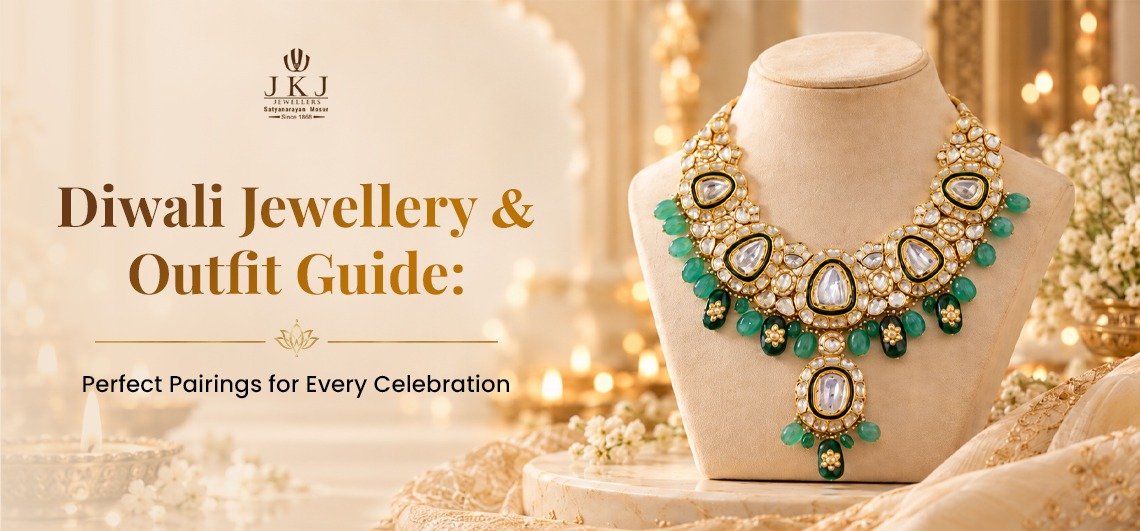
Diwali, the celebration of the spiritual victory of light over darkness and good over evil, brings friends and families together for prayers and bursting crackers to enjoy the festival. The core rituals of Diwali are lighting diyas (oil lamps) as well as performing puja to Goddess Lakshmi and Lord Ganesha for prosperity and good fortune. Along with that, what you wear and how you accessorise play an important role in how the celebration feels.
To embrace this festive joy with more warmth, this guide explores which outfits to pair with jewellery for morning puja, evening aarti, family gatherings, office celebrations, parties and card nights. Whether you already have a collection of attractive pieces or are planning to visit a jewellery shop in Jaipur, knowing about jewellery pairing ideas can help you create a complete festive look.
Why Jewellery and Outfit Pairing Matters for Diwali?
Diwali involves multiple events across a few days, and each one calls for a different look. Jewellery that suits the outfit’s colour, metal tone and design creates a finished, put-together appearance. A well-planned pairing also makes dressing up simpler, since the choices are already decided in advance.
The colour of the outfit, the fabric and the neckline all influence which jewellery style works with it. Planning these pairings ahead of time allows you to move through puja, gatherings and parties with looks that suit each occasion.
How to Choose Jewellery Based on Your Diwali Outfit?
Choosing the right jewellery begins by looking at the outfit’s colour, style and weight, as well as the event to dress for. Each of the following factors has a significant role in your final look:
Consider the Outfit Colour
The colour you’re wearing determines which metals and stones enhance your look. Gold jewellery complements outfits in red, maroon and green. Silver or diamond pieces go well with clothing in shades of peach, mint or powder blue. Kundan and Polki jewellery that has white and gold tones go well with all colours.
Match Jewellery With the Outfit Style
Traditional outfits like sarees and lehengas go well with Kundan, Polki or temple gold jewellery. Indo-western wear pairs up well with contemporary styles like geometric designs or diamond pieces with minimal settings. The kind of detailing on the outfit generally gives an indication of whether the jewellery should be traditional or contemporary.
Balance Heavy Outfits With Statement Jewellery
Outfits with heavy embroidery or zari work already carry visual weight. Keeping a single statement piece in such outfits, such as a choker or jhumkas, pairs well. Adding multiple pieces to a heavy outfit can make the look feel cluttered. The embroidery or zari work itself acts as an accessory, so jewellery only needs to add one focal point.
Choose Jewellery Based on the Occasion
A morning puja calls for simpler pieces. An evening party allows for more layered jewellery. Matching jewellery to the occasion keeps the look appropriate throughout the day. The time, lighting and nature of each event usually indicate how elegant the jewellery can be.
Diwali Jewellery and Outfit Pairings for Every Occasion
Each Diwali event has its own timing and mood, and jewellery choices usually shift along with it. Here are some jewellery and outfit pairing tips that are suitable for women throughout these festive days:
Diwali Puja: Gold Jewellery With Traditional Sarees
Since puja mornings are meant to be functional as well as festive, lighter gold pieces work better than heavy sets. A temple-style necklace, small jhumkas and thin bangles are common choices because they stay comfortable through the rituals.
Family Gatherings: Kundan Jewellery With Ethnic Outfits
Family gatherings tend to run longer than puja, so jewellery with slightly more detail suits the occasion. A Kundan necklace paired with matching earrings works well here, since the white and gold tones pair easily against jewel-toned or pastel outfits alike.
Diwali Parties: Diamond Jewellery With Contemporary Outfits
Evening parties are usually where the statement jewellery comes out, and diamonds suit this setting because of how they catch artificial light. A diamond necklace or a pair of statement earrings pairs naturally with a contemporary gown or a fusion lehenga.
Office Diwali Celebrations: Minimal Jewellery With Elegant Suits
Office settings call for restraint, so small studs, a slim chain or delicate bangles are a better fit than anything heavier. These pair well with elegant suits or plain sarees, since the goal is to look festive without losing the formality of a workplace.
Diwali Dinner: Statement Earrings With Designer Sarees
Dinner settings keep guests seated for most of the evening, which puts more attention on the face than the rest of the outfit. Long jhumkas or chandelier earrings work well here. Because the earrings carry the look, the neckline is often left bare or paired with just a small pendant.
Card Parties: Polki Jewellery With Indo-Western Outfits
Card parties often stretch late into the night, so comfort matters as much as appearance, which is where Polki jewellery works well. Its uncut, foil-backed stones give it a traditional look while staying lighter than solid gold pieces.
Bhai Dooj: Lightweight Gold Jewellery With Traditional Outfits
Bhai Dooj mornings involve rituals and visiting family, similar in pace to puja day, so lightweight gold jewellery again works well. A simple necklace paired with small earrings suits a traditional suit or saree without adding extra weight through the day.
Best Jewellery to Pair With Popular Diwali Outfits
Each outfit category carries a distinct drape, embroidery level, design and silhouette. Below is a quick glance at jewellery pieces that pair well with sarees, lehengas, Anarkali suits, sharara and gharara sets and Indo-western outfits:
Jewellery With Sarees
A chiffon or georgette saree has a soft drape and pairs well with lightweight diamond jewellery or a delicate choker. A heavily embroidered saree, such as Banarasi silk, pairs better with a single statement piece, such as a choker or jhumkas, with the remaining jewellery kept minimal. A plain saree, having no embroidery to balance against, allows for a heavier statement necklace.
Jewellery With Lehengas
A heavily embroidered lehenga is suited to cleaner Polki or Kundan designs, since dense embroidery combined with equally detailed jewellery can appear cluttered. A lehenga with minimal embroidery allows for a wider choker or larger chandbalis.
Jewellery With Anarkali Suits
A jewel-toned Anarkali is suited to a Kundan choker, as the white and gold tones stand out against deep shades. A pastel Anarkali is better paired with pearls, which pair well against lighter colours. A sequinned Anarkali pairs with minimal gold pieces, allowing the sequin work to remain the focal point.
Jewellery With Sharara and Gharara Sets
Since these sets carry a flared silhouette below the waist, a single focal point above it is generally more suitable. A large necklace or a statement maang tikka works well, as the flared trousers draw attention downward, leaving the neckline or forehead as the natural focus. Earrings are typically kept simpler in this pairing.
Jewellery With Indo-Western Outfits
A cape saree or jacket lehenga is better suited to silver or rose gold jewellery than traditional yellow gold, as the cooler tone matches the contemporary cut. A cape and skirt combination pairs well with stackable bangles, since their movement complements the flare of the skirt. Structured Indo-Western pieces are also suited to ear cuffs or climbers, given their close-fitting shape.
Jewellery Styles to Consider for Diwali
Diwali jewellery generally falls into five broad categories. Each of the following has a distinct material and technique:
Gold Jewellery
Gold jewellery remains the most traditional Diwali choice, worn for its cultural association with prosperity and its long-standing role in puja rituals. It ranges from lightweight daily wear pieces to heavier temple-style sets with religious motifs.
Polki Jewellery
Polki uses uncut, unpolished natural diamonds set in a gold and lac base. Because the diamonds are raw, each piece of Polki jewellery in Jaipur has an irregular, antique quality, and no two pieces look exactly alike.
Kundan Jewellery
Kundan is a setting technique that presses refined glass or gemstones into a gold foil base. It produces a glossier, more colourful finish than Polki and is generally lighter and more affordable, since it does not rely on natural diamonds.
Jadau Jewellery
Jadau refers to the broader technique of embedding stones directly into a heated lac-filled gold frame. Both Kundan and Polki pieces can be made using the Jadau process, which often includes meenakari enamel work on the reverse.
Diamond Jewellery
Diamond jewellery uses cut and polished diamonds set in gold, platinum or white gold. It suits contemporary outfits and evening events, given its brightness under artificial lighting.
How to Choose Jewellery According to Your Diwali Look?
Choose your Diwali jewellery by matching your clothing’s colour tones and picking one statement piece. Here are some more ways to choose jewellery for Diwali:
Traditional and Royal Looks
A traditional or royal look goes well with Kundan or Jadau jewellery in Jaipur, as both involve heritage craftsmanship and intricate detailing. Temple gold pieces with religious motifs also come into play for the rituals associated with puja.
Elegant and Minimal Looks
An elegant and minimal look calls for stud earrings or a simple chain or bangles in minimalistic designs. Diamond jewellery in minimal settings also complements this kind of ethnic look.
Modern and Contemporary Looks
Modern or contemporary ethnic jewellery involves geometric patterns or rose gold pieces or diamonds set in minimal settings. Indo-western outfits and fusion silhouettes work well with this kind of look.
Statement and Festive Looks
Statement or festive ethnic jewellery calls for Polki jewellery, layered necklaces and chunky chandbalis, which can make your ensemble pop at the party. This look is suited for evening events and puja.
Common Jewellery Styling Mistakes to Avoid on Diwali
A few small oversights can ruin a festive look, despite well-chosen outfits and jewellery. Here are a few mistakes to avoid while dressing on Diwali:
- Using a statement necklace and big earrings, which makes them compete for attention instead of creating a focal point.
- Combination of warm golden colours and silver jewellery without a common colour link between them.
- Selection of heavy jewellery for events such as a puja, when light jewellery would have been better.
- Use of multiple bangles at one time, which makes the overall look feel cluttered.
- Ignoring the outfit’s neckline while picking a necklace.
Diwali Jewellery Styling Tips for a Complete Festive Look
A few styling habits can help bring the outfit and jewellery together into one finished look. The following tips are useful to keep in mind while getting ready for Diwali:
- Pick one focal piece, such as a necklace or a pair of earrings and keep the rest of the jewellery minimal.
- Match the metal tone of the jewellery to the undertone of the outfit: warm gold with warm colours, silver or white gold with cooler shades.
- Lighter jewellery pieces should be chosen for daywear, while layering is better for evening wear.
- Make sure you take the neckline and the sleeves of your outfit into account while choosing a necklace or bangles to place your jewellery in the right place.
- Take into account the hairstyle as well if you are going to wear statement earrings or maang tikka.
Frequently Asked Questions About Diwali Jewellery and Outfit Styling
1. Which jewellery is best to wear for Diwali Puja?
Lightweight gold jewellery, such as a temple-style necklace, small jhumkas and thin bangles, suits Diwali puja since it stays comfortable through the rituals.
2. What jewellery goes well with a Diwali saree?
Lightweight diamond pieces often match with chiffon or georgette sarees. Whereas a single statement piece, such as a choker, suits heavily embroidered sarees like Banarasi silk.
3. Which jewellery should I wear with a lehenga for Diwali?
Lehengas with heavy embroidery can look good with cleaner Polki or Kundan Jewellery, whereas a wider choker or big chandbalis go well with lehengas having little embroidery.
4. Is Polki jewellery suitable for Diwali celebrations?
Yes, Polki jewellery is suitable for Diwali occasions because of its uncut diamond appearance and light weight as compared to gold.
5. How do I match gold jewellery with my Diwali outfit?
Gold jewellery pairs well with red, maroon, yellow and green outfits, since these colours are common for Diwali and suit gold’s warm tone.